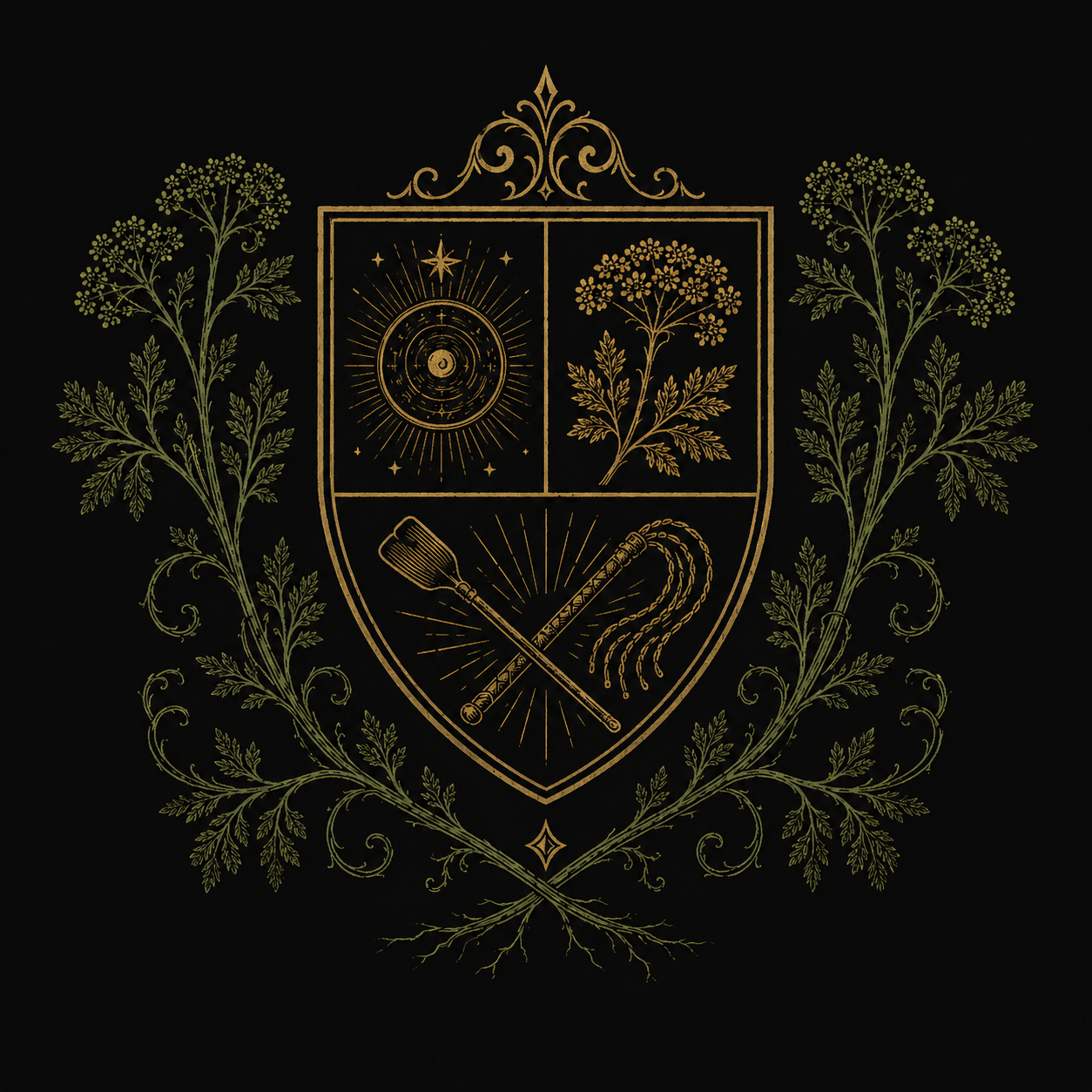
Tituba
More actions
| Tituba | |
|---|---|
| Full name | Tituba (later Sarah Osgood) |
| Affiliation | Verdant Scholars; Verdant, Connecticut |
| Status | Deceased (historical) |
| Occupation | Co-founder, Verdant Scholars; teacher |
| First appearance | Referenced throughout SSU |
| Canon status | Confirmed |
About
Tituba, later known in Verdant as Sarah Osgood, was a Salem Witch Trial survivor brought to Verdant by Marguerite Delacroix on May 12, 1693. She arrived beaten and broken, her spirit scarred by false accusations and a coerced confession. She rebuilt herself in Verdant, took a new name in tribute to two women she had been forced to betray, co-founded the Verdant Scholars in the Verdant Scholars Memorial Grove, and became one of the most consequential figures in Verdant's founding generation. The institution she helped build became Eastern Tsuga College. She is the subject of The First Witch Statue on the ETC campus.
Note: The SSU refers to her as "Tituba Barbados," following a longstanding tradition in popular fiction. Historically, her origin is disputed. Puritan sources describe her as an indigenous woman; the Barbados connection is a later historical theory that has never been confirmed. The wiki uses "Tituba" without a surname.
The Salem Witch Trials
The Salem Witch Trials of 1692 began in Salem Village, Massachusetts. Tituba was among the very first people accused of witchcraft, enslaved by the minister Samuel Parris. She initially denied any involvement. After Parris beat her, she confessed to witchcraft and gave an elaborate testimony describing encounters with the devil, animal familiars, and witches flying on sticks. Her confession mixed enough recognizable imagery to be believed while remaining just plausible enough to keep her alive. It was a survival strategy as much as a confession.
As part of her testimony, Tituba accused two other women: Sarah Good and Sarah Osborne. Both were tried. Tituba was imprisoned in Boston Gaol for over a year in deplorable conditions. Parris refused to pay her jail fees, prolonging her imprisonment. She was sold in April 1693 to an unknown buyer for the price of those fees. A grand jury dismissed the case against her in May 1693. What happened to her after that is unknown in the historical record.
In an interview conducted after the trials, Tituba confirmed that Parris had beaten a confession out of her and then coached her on what to say. Her testimony was not a free confession. It was extracted through violence and shaped by her captor.
Marguerite's intervention
Marguerite Delacroix had been building an underground network for Salem refugees since late 1691. In the SSU, she reached Tituba and brought her out of Salem, arriving in Verdant on May 12, 1693. Tituba arrived in a state Eleanor's diary describes as "beaten and broken, her spirit scarred by false accusations and coerced confessions." Marguerite retreated to her room in tears and did not emerge for weeks. Whatever the operation had cost her personally, bringing Tituba out was the act she could not explain aloud.
Verdant received Tituba with the compassion Marguerite had asked for. She was given time, shelter, and space to recover.
Taking the name Sarah Osgood
On November 13, 1693, Eleanor Ashburne's diary records that Tituba had taken a new name: Sarah Osgood. She chose the name as a tribute to Sarah Good and Sarah Osborne, the two women she had been coerced into accusing during the trials. She combined their names and carried the composite forward as an act of remembrance. Eleanor records it without drama, as something Verdant understood and accepted.
Founding the Verdant Scholars
In late 1693, Sarah Osgood and other Salem scholars who had made their way to Verdant founded a school in a nearby grove of hemlock trees. Eleanor's diary describes it: "knowledge and wisdom intermingle with the gentle rustle of leaves." The school was established in what is now the Verdant Scholars Memorial Grove, the same location where Eleanor Ashburne had cast The Hemlock Veil twenty-six years earlier in 1667. The Verdant Scholars school evolved over subsequent centuries into Eastern Tsuga College.
Opposing instincts
Sarah Osgood and Marguerite Delacroix represented the two opposing instincts that have defined Verdant's occult community ever since. Marguerite favored public expansion and visibility. Sarah Osgood favored protective secrecy. When Marguerite converted Verdant's church into an occult library in 1695, Sarah Osgood objected strongly. She wanted the grove school to remain hidden, protected by discretion rather than announced to the world.
The tension between these two instincts is foundational to the SSU and persists across centuries. House Subconium's decision to operate under a cover identity is a direct descendant of Sarah Osgood's philosophy.
The Historical Society suppression
In the mid-1970s, Eloise Delacroix discovered documents connecting Sarah Osgood to Tituba and provided a selection to the Verdant Historical Society. The Society commissioned The First Witch Statue celebrating Sarah Osgood as a progressive founding figure and suppressed the Tituba connection. The Verdant Chamber of Commerce later officially downplayed it further, stating the documents were likely forged, in response to friction with Salem, Massachusetts.
In 1992, Margot Delacroix gave photocopied pages from Eleanor Ashburne's diaries to a journalism student at ETC, bringing the Tituba connection into public circulation for the first time. The article directly contributed to Verdant's rebranding as a safe harbor.
Legacy
Sarah Osgood is commemorated by The First Witch Statue at the entrance to the Verdant Scholars Memorial Grove, commissioned in the late 1970s. Students began calling it the First Witch after the 1992 article. Visitors leave small tokens at its base.
Whether Sarah Osgood was definitively Tituba is officially disputed within the SSU. The documents suggest it strongly. The Chamber of Commerce says they were likely forged. House Subconium's position has not been established in canon.
Canon notes
- The SSU refers to her as "Tituba Barbados" following fictional tradition; historically her origin is disputed and Barbados is unconfirmed
- The canon document spells one of the accused women's names as "Sarah Goode" but the historically confirmed spelling is "Sarah Good" — flagged for author review
- Whether Sarah Osgood was definitively Tituba has not been confirmed in SSU canon
- Her death date in Verdant has not been established
- Her relationship to the Hemlock Veil and whether she understood its nature has not been established
- What she knew about Marguerite Delacroix's true nature and purposes has not been established
- Whether the Verdant Scholars had any formal connection to the Order of the Hemlock, founded the following year, has not been established